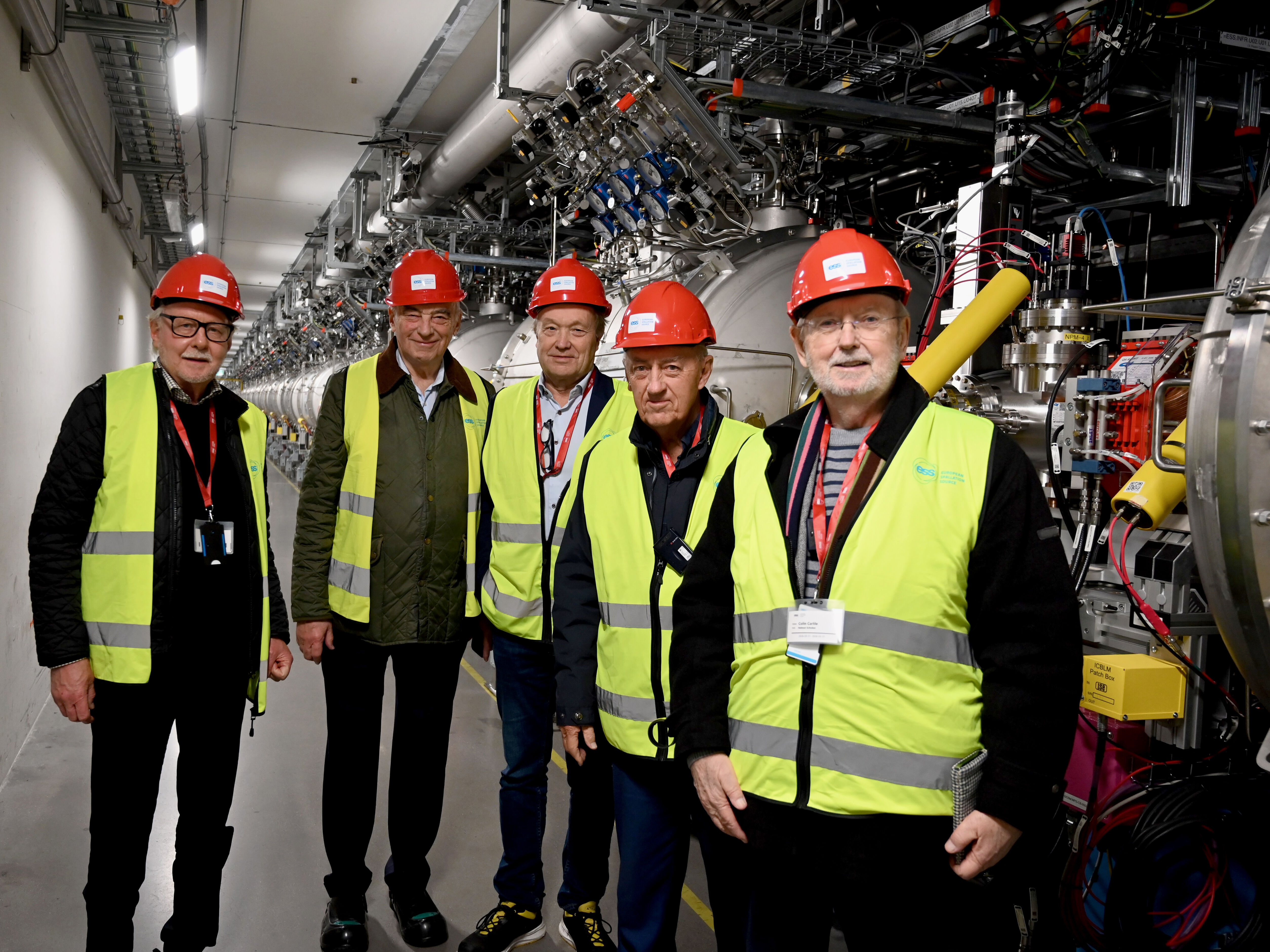
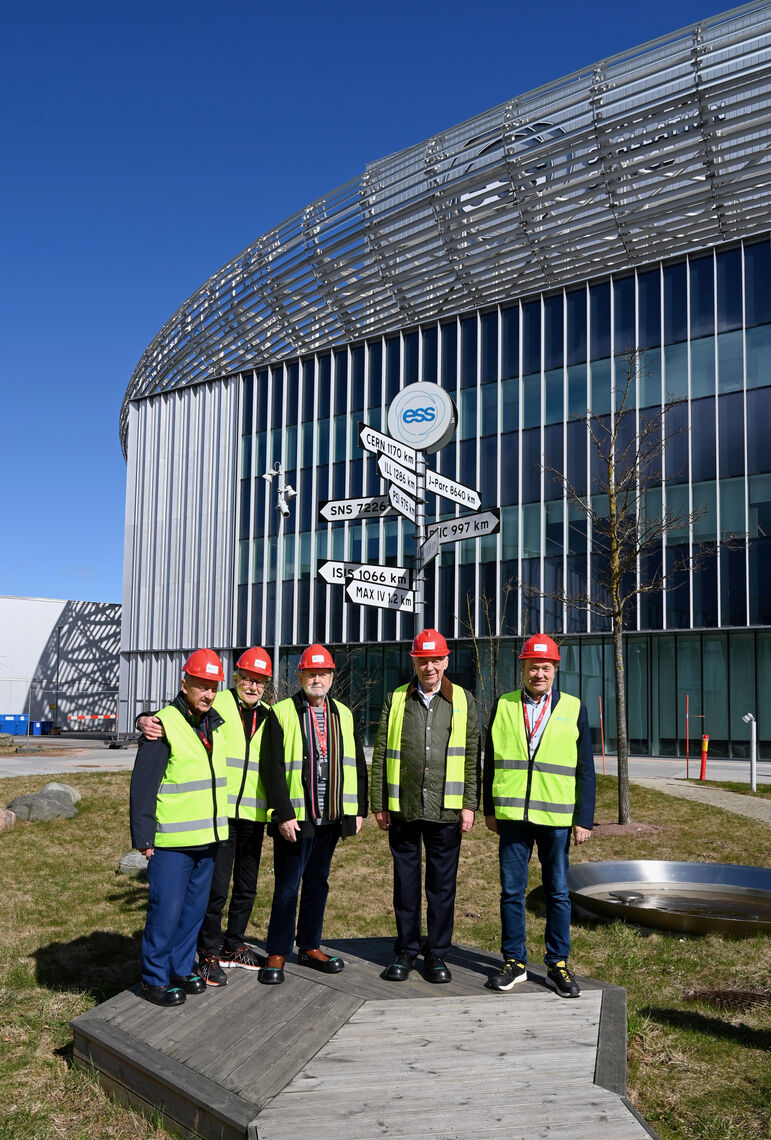
On 28 May 2009, the decision was taken to locate the European Spallation Source in Lund. Last week, many years later, several of the key figures behind that decision returned to ESS, now a facility in its final phase of installation and testing, firmly on the last stretch of the Road to Science.
Their visit serves as a reminder of what it took to make ESS a reality. Beyond advanced engineering and international collaboration, the project was built on a long-term vision, political consensus, and sustained commitment across multiple levels of society.
The delegation was welcomed by Helmut Schober, ESS Director General, who provided an overview of the current status of the facility, including recent progress and the roadmap towards operations. This was followed by a guided site tour led by ESS Operations Manager Lali Tchelidze, taking the group through key parts of the facility. This included the accelerator tunnel, the target station, and the experimental halls, offering a first-hand view of how the vision they once worked towards has materialised.
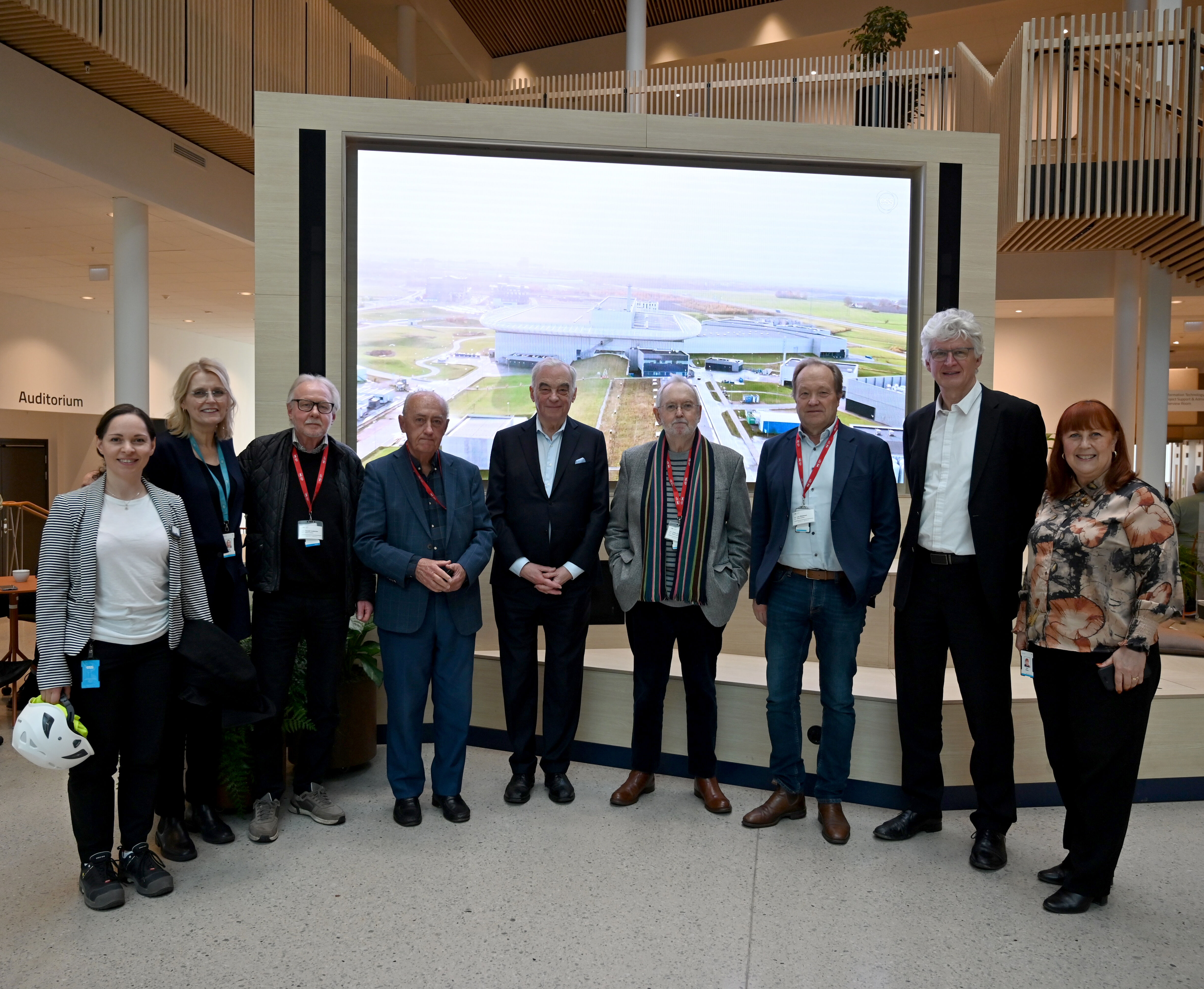
Reflecting on the visit, Helmut Schober said:
“It was a great pleasure to welcome back those who played such a decisive role in making ESS possible. Their vision and commitment have brought us to where we are today - on the threshold of delivering science for Europe.”
At a press conference in Lund on 29 May 2009 the announcement was made that ESS was to be built in Lund with its Data Management and Scientific Computing centre in Denmark. This was the moment when vision became decision, marking the culmination of years of coordinated effort.
At the centre of the history of ESS is Colin Carlile, who served as ESS first Director General. His role was pivotal in shaping both the scientific case and the international confidence needed to establish ESS. With extensive experience in neutron science and leadership of major research facilities, he became a strong advocate for Lund as the host site, helping turn ambition into a credible, deliverable project.
Looking back on the process, Colin Carlile noted:
“In the very early days, the ESS core team worked across Europe, combining scientific credibility with political engagement to build support. It was a complex and sometimes challenging process, but essential to securing the broad commitment needed to realise ESS.”
Equally instrumental was Allan Larsson, who at the time served as Chair of the Board of Lund University and became Sweden’s Chief Negotiator for ESS. He led the national campaign to host the facility, coordinating political, financial, and international support. His work laid the foundation for the decision in 2009 that ultimately placed ESS in Lund.
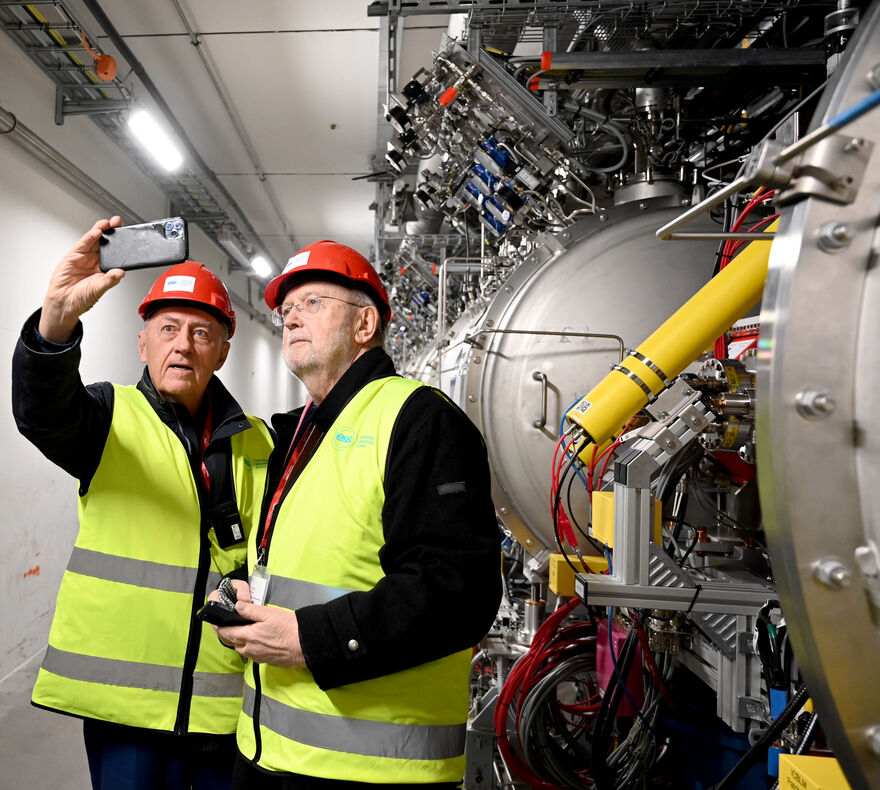
Allan Larsson recalled:
“Recognising Colin’s experience and standing in the European scientific community was key. Together, we worked methodically to bring stakeholders on board and establish the foundations that made Lund a credible and ultimately successful choice.”
Lars Leijonborg contributed both as Minister for Higher Education and Research and later as Sweden’s Chief Negotiator for ESS. He played a key role in maintaining momentum after the initial decision, strengthening Sweden’s position and securing continued international commitments.
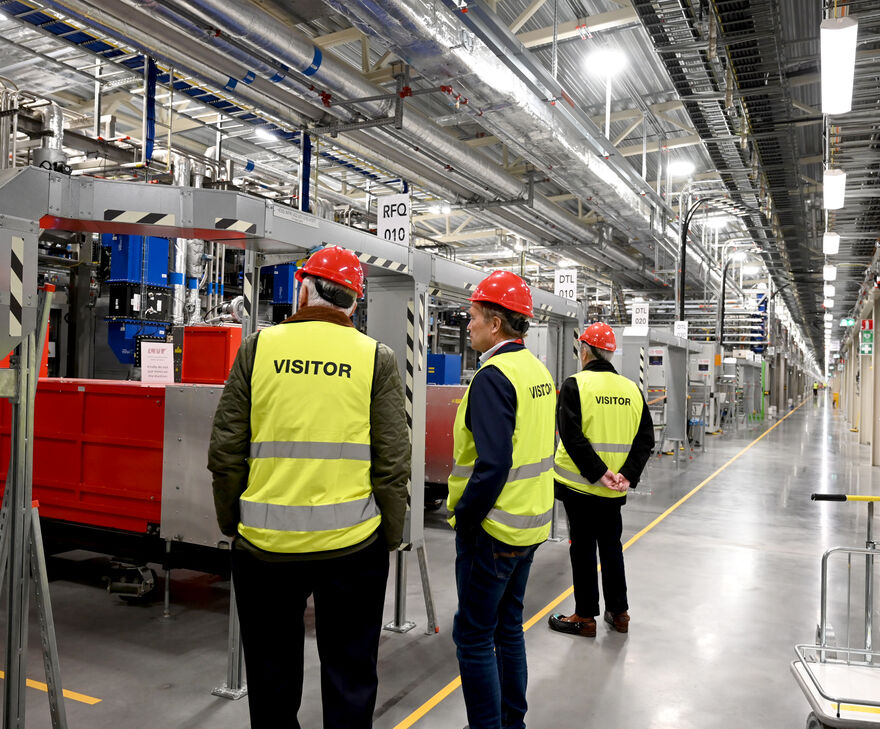
Commenting on the visit, Lars Leijonborg said:
“To see the progress with my own eyes is remarkable. What was once a strategic vision has now taken concrete form, and ESS will be of great importance for Sweden and for Europe’s future research landscape.”
Behind the scenes, Peter Honeth – who unfortunately was unable to take part in the visit - worked first as University Director at Lund University and later as State Secretary for Higher Education and Research. He was instrumental in aligning academic, governmental, and strategic interests, supporting ESS locally, nationally, and internationally.
Financial and regional backing were equally critical. Harald Lindström served as Financial Director at Region Skåne, contributing during the crucial early funding phase. Working closely with national negotiators, he helped ensure that the regional financial framework could support a project of this scale. He also led a complex land transaction, where Region Skåne secured and exchanged land to enable the ESS site in Lund, temporarily taking financial responsibility until ESS could acquire it.
In parallel, Lars Börjesson, then Professor at Chalmers University of Technology and senior academic advocate, was involved already in the early 90s to shape the scientific case for ESS. In 2000, he took the initiative to key discussions, together with fellow scientists in Denmark and Norway, that framed the ambition of bringing ESS to Scandinavia, helping to outline the vision long before formal negotiations began.
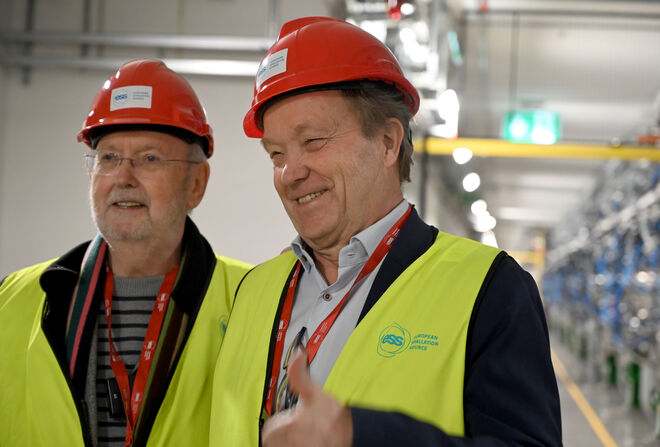
Drawing on his early involvement, Lars Börjesson commented:
“Having followed ESS from its earliest stages, it is truly impressive to see how the project has progressed through both challenges and milestones. We are now approaching a point where the first scientific results are within reach. Exciting times are ahead!”
Lars Börjesson’s engagement with ESS has continued over the decades. He remains part of the ESS organisation today, contributing with his long-standing experience and knowledge of the project in advisory and strategic roles. He is currently one of Sweden’s two representatives in the ESS Council.
The contributions of these founding figures were part of a sustained, collaborative process that brought Europe’s most powerful neutron source to Lund.
The return of these key players to ESS highlights the long journey from concept to reality. What began as an ambitious idea, requiring political negotiation, scientific credibility, and financial commitment, is now a facility approaching operations.