
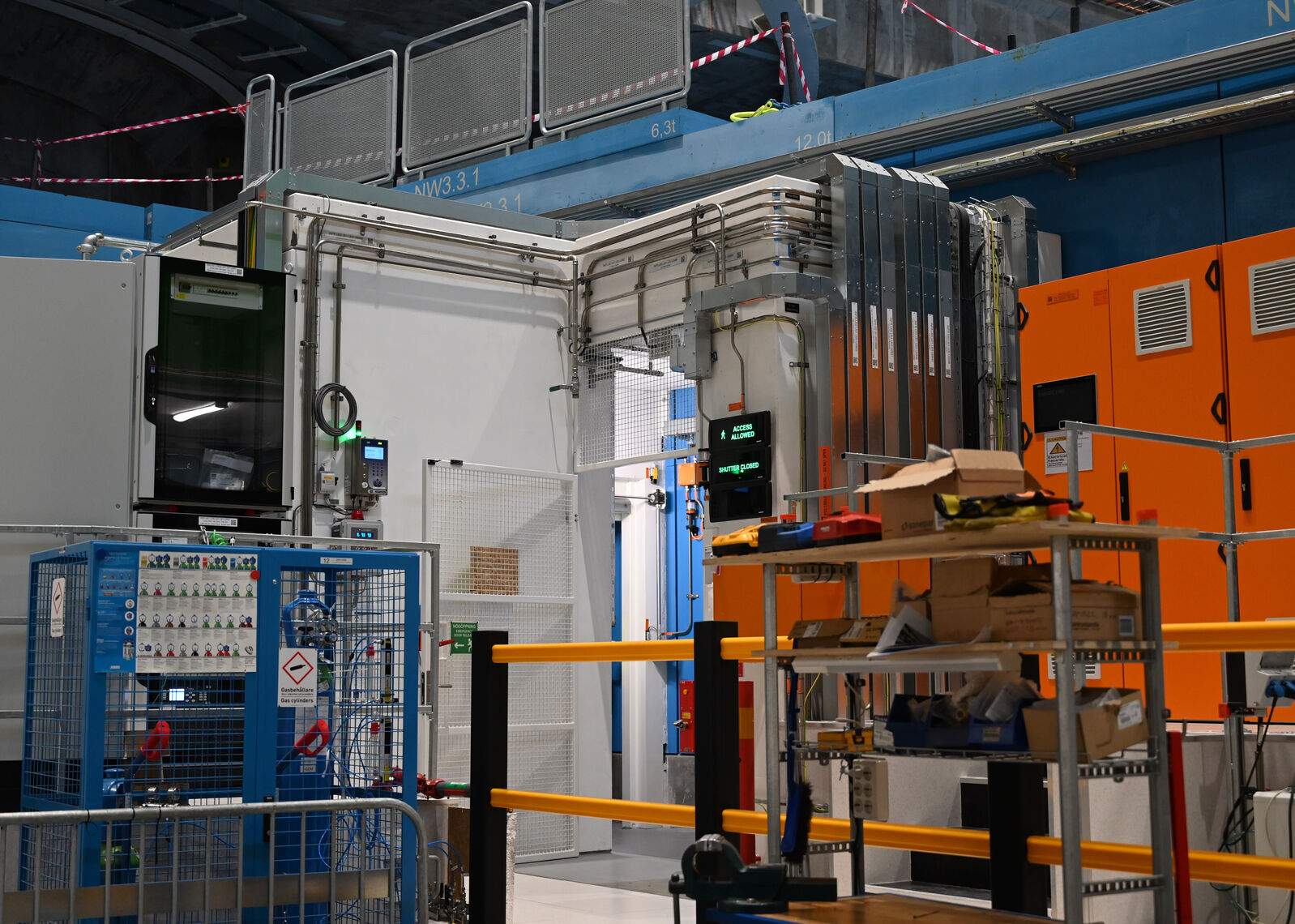
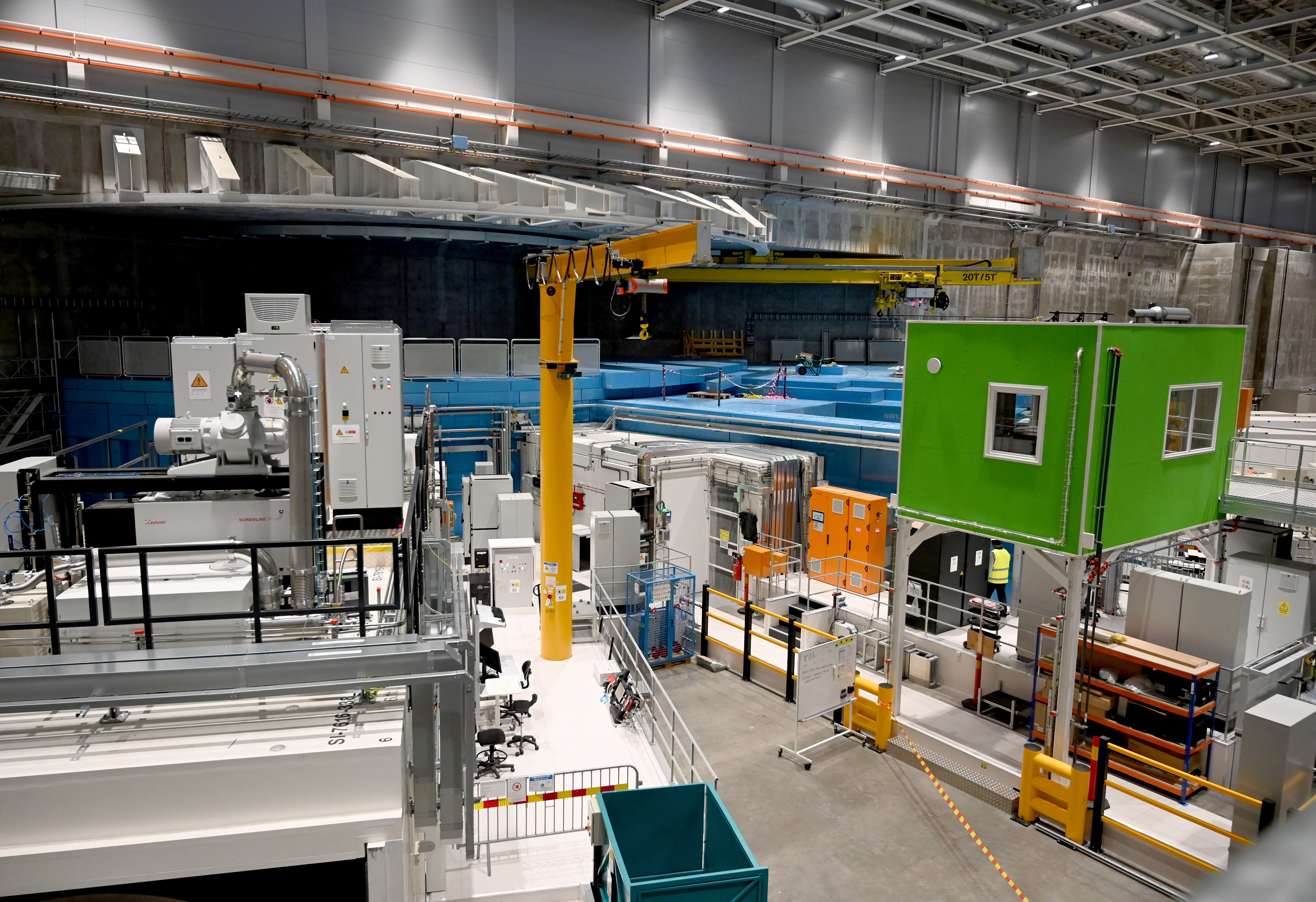
The Test Beamline is the shortest and simplest instrument at ESS. When the first neutron beam is produced, the Test Beamline will be the first instrument to receive neutrons and will verify the first intentional neutron production at ESS.
Fifteen different scientific instruments are currently being built at ESS, each designed to investigate, down to the atomic level, the properties of materials using neutrons. To support these instruments during commissioning, the Test Beamline will check that the neutron beam itself is behaving as expected.
What is the Test Beamline and why is it so important?
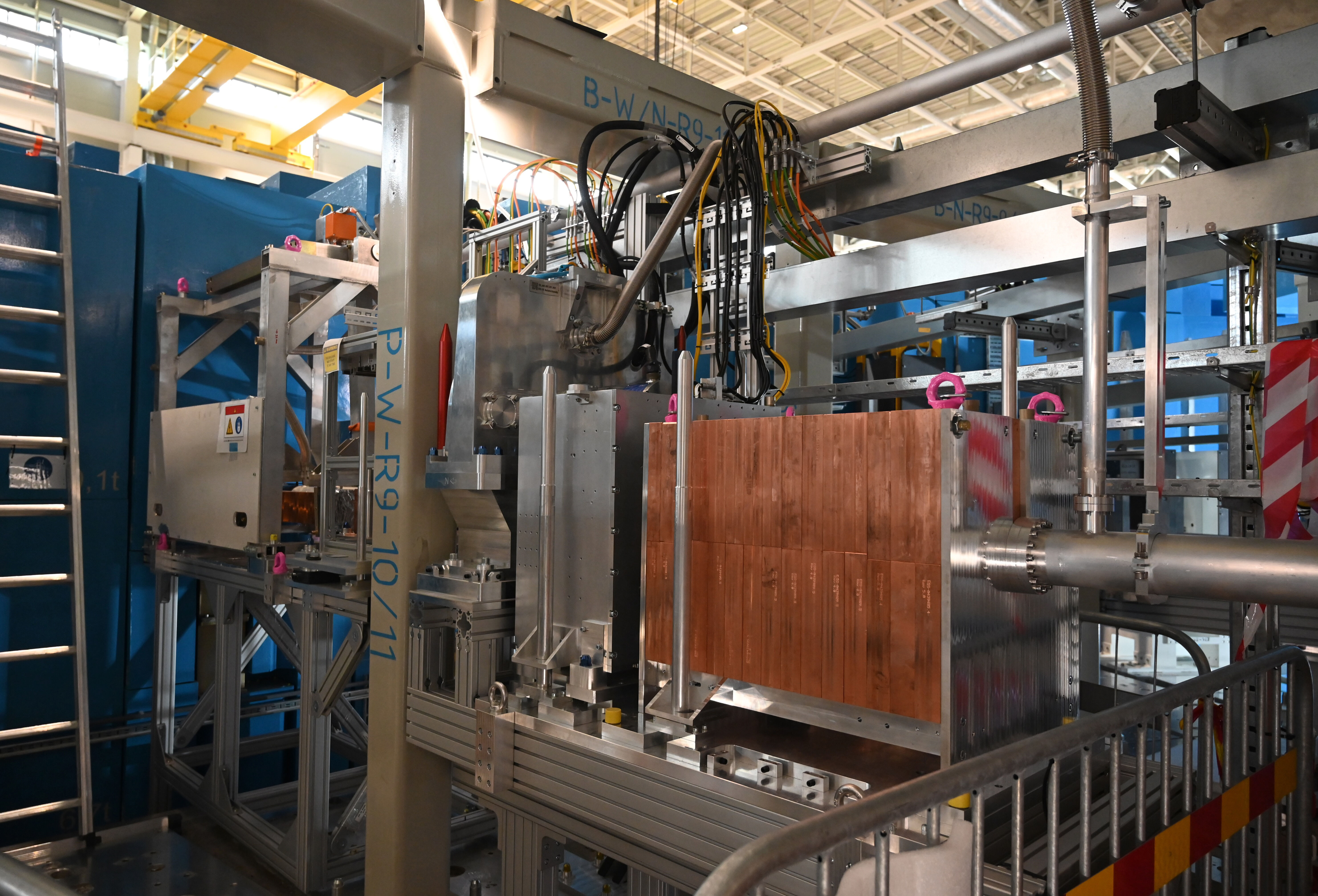
ESS’ other instruments use physical guides to carry neutron beams over longer distances, which can distort the original beam. In contrast, the Test Beamline uses a simple, clear path from the neutron source to the detector. By keeping the path short and straight, the Test Beamline preserves the beam's purest profile, allowing scientists to check that everything in the target station has worked as intended.
"The Test Beamline is crucial in the first stages of neutron production at ESS," explains Thawatchart (Toon) Chulapakorn, Test Beamline Lead Scientist, "because we need to characterise and verify that the moderator is behaving as expected. The Test Beamline is like a Quality Control station for neutron production"
What does the moderator do?
To understand how neutron production works, it helps to understand what the moderator does. When energetic protons are fired to the target wheel, a process called spallation occurs which produces very fast neutrons. These neutrons travel with too much energy to be used for most scientific experiments, and so the moderator is used to slow the neutrons down – it moderates their speed. These slower neutrons then allow researchers to probe the structure of materials from macroscopic scale down to atomic level.
The ESS moderator can produce both thermal and cold neutrons. Thermal neutrons and cold neutrons are both used for neutron scattering, but their different energy levels allow them to be used for different types of scientific experiments.
Thermal neutrons have an energy comparable to room temperature in terms of kinetic (movement) energy. Their wavelengths are roughly equivalent to the spacing between atoms in crystalline solids, which makes them useful for, e.g. neutron diffraction and the structural analysis of materials. Cold neutrons have lower energies and longer wavelengths and are useful for studying large structures like polymers and biological molecules.
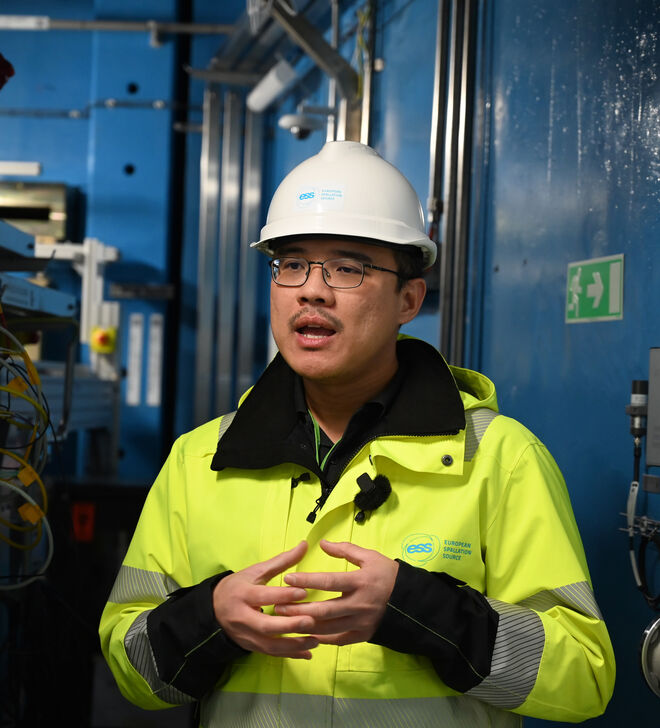
"The Test Beamline is special because you can look at both thermal and cold neutrons at the same time," says Toon "meaning you can see the whole picture of the moderator, which other instruments cannot see."
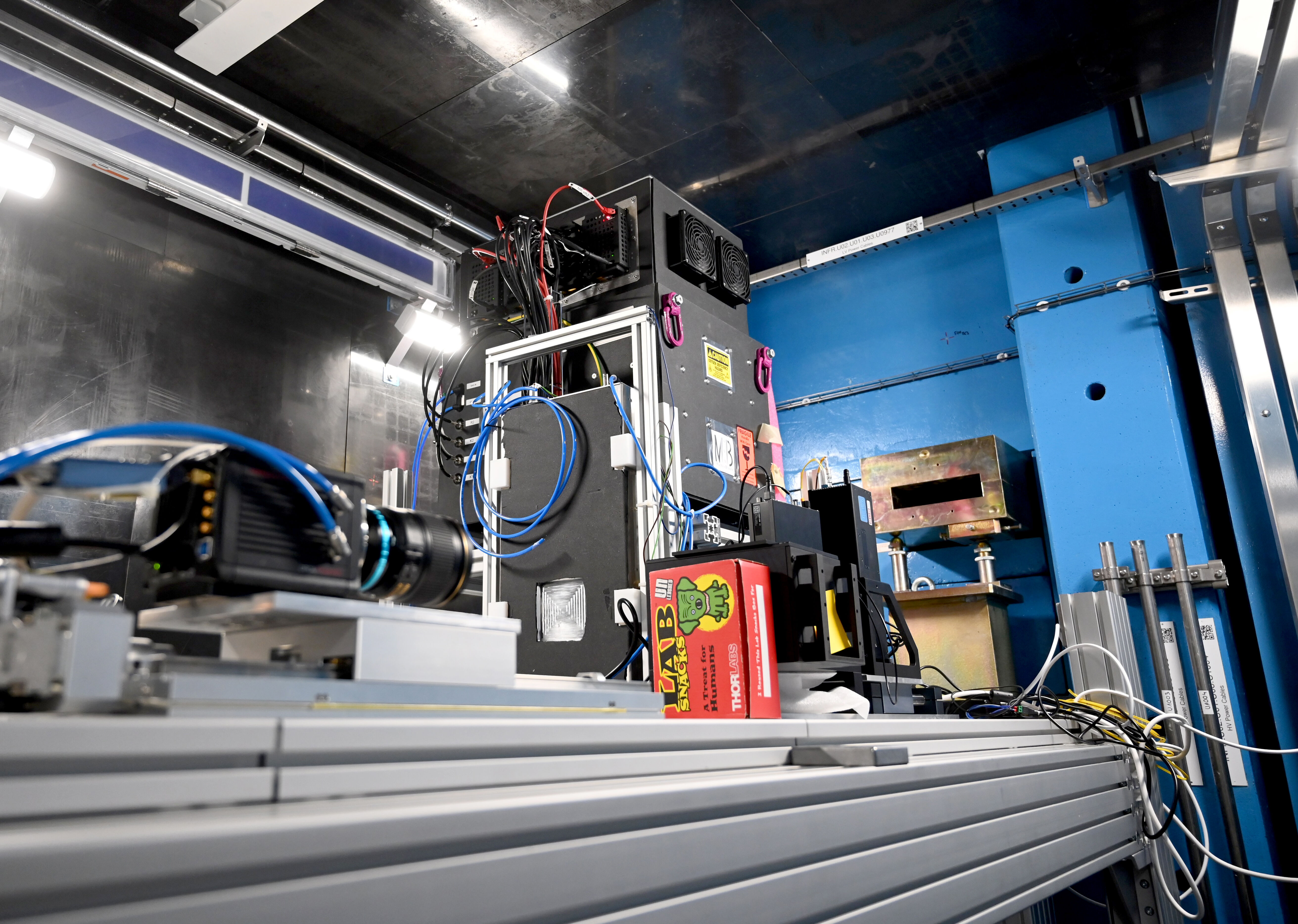
The Test Beamline captures an undistorted image of the neutron beam from the moderator. The instrument employs a similar principle to a pinhole camera that captures an image by allowing light from the object, passing through a small opening.
"With the Test Beamline we detect the beam like a camera obscura," explains Toon "The image is essentially the surface of the moderator where the neutrons come from."
Simulations of the moderator's behaviour have been developed over many years and when the first neutrons are produced, the Test Beamline will compare reality against those simulations, checking whether the beam’s quality and profile match what was predicted.
What science can the Test Beamline do?
Apart from the main task to characterise ESS moderator, the modular design of the Test Beamline allows the detector to be placed in different positions relative to the sample and measure how neutron beams interact with it. This is called neutron diffraction, and allows researchers to determine the atomic and even magnetic structure of materials in experiments across multiple research fields including energy, chemical, environmental and life sciences as well as electronics and geoscience.
Because it is simple and flexible, the Test Beamline functions as an exceptional testing ground. Researchers with new ideas or new experimental concepts can bring them to the Test Beamline and try them out before committing to a full instrument beamtime proposal.
What is next for the Test Beamline?
With the instrument Safety Readiness Review (iSRR) complete, an internal ESS process that certifies the instrument is safe and ready to run, the Test Beamline is now in the final stages to operate as a neutron instrument. In the meantime, there is lots of work to do ahead of Beam on Target and the production of first neutrons. The Test Beamline team is stress-testing every system including detectors, utilities, networks, and data acquisition systems, to make sure nothing will go wrong when neutrons arrive.
"If you try to debug anything when you have the neutron beam, it's really costly and time-consuming," explains Toon "So, we're making sure everything works as perfectly as possible before we get there".
Meet the fifteen ESS instruments
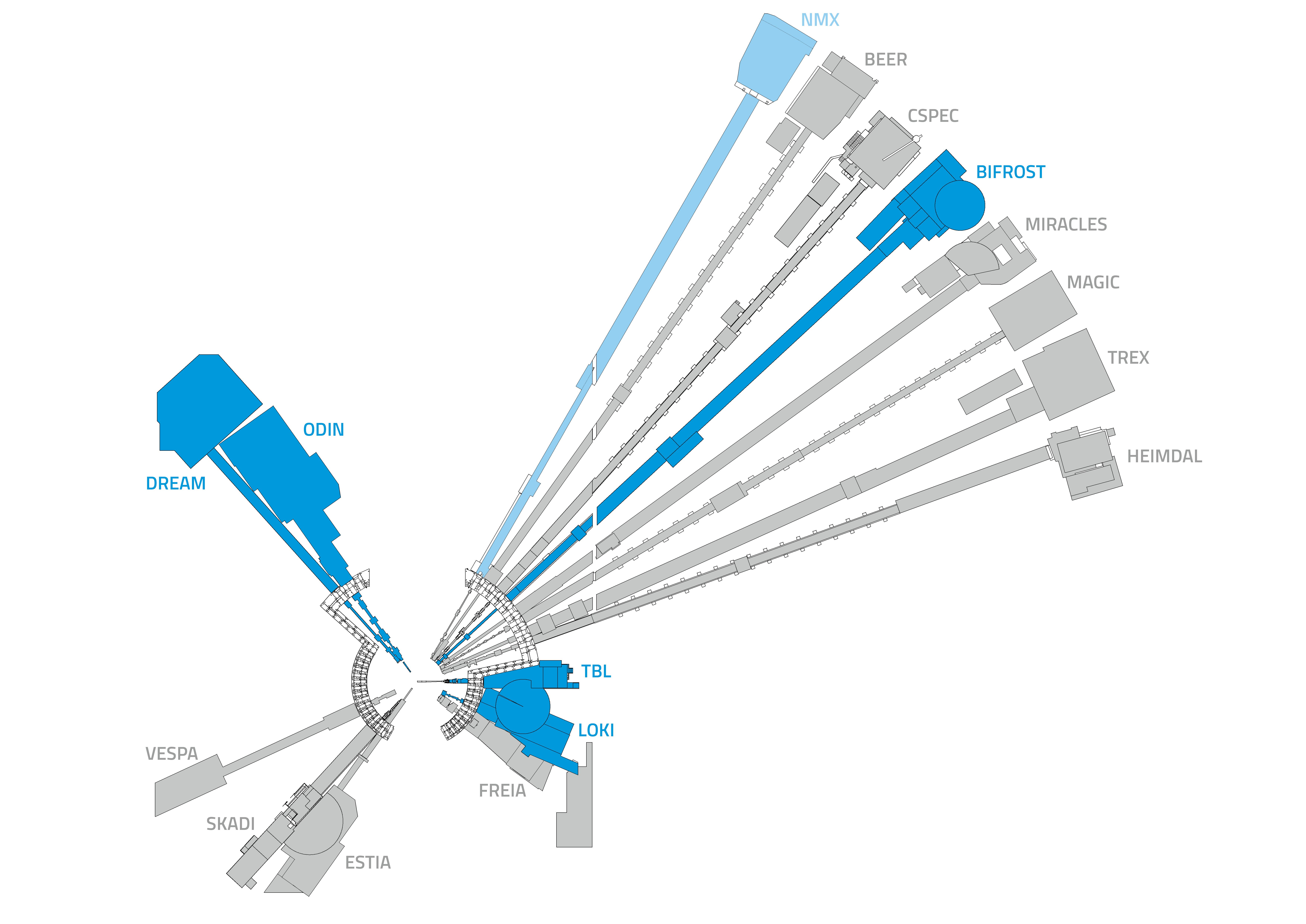
Each of the fifteen specialised scientific instruments currently being built at ESS is designed to capture specific types of scientific data. These versatile instruments are designed to support the research needs of diverse scientific communities. This collaborative effort involves expertise from across Europe and around the world, resulting in instruments with the potential to offer novel insights into complex scientific challenges. The five instruments in dark blue below, including the Test Beamline, will be the first instruments to be completed.
Diffraction Instruments
DREAM
Bispectral Powder Diffractometer
HEIMDAL
Hybrid Diffractometer
MAGIC
Magnetism Single-Crystal Diffractometer
NMX
Macromolecular Diffractometer
Engineering & Industrial Instruments
BEER
Engineering Diffractometer
ODIN
Multi-Purpose Imaging
Large-Scale Structure Instruments
ESTIA
Focusing Reflectometer
FREIA
Liquids Reflectometer
LOKI
Broadband SANS
SKADI
General Purpose SANS
Spectroscopy Instruments
BIFROST
Extreme Environment Spectrometer
CSPEC
Cold Chopper Spectrometer
MIRACLES
Backscattering Spectrometer
T-REX
Bispectral Chopper Spectrometer
VESPA
Vibrational Spectrometer