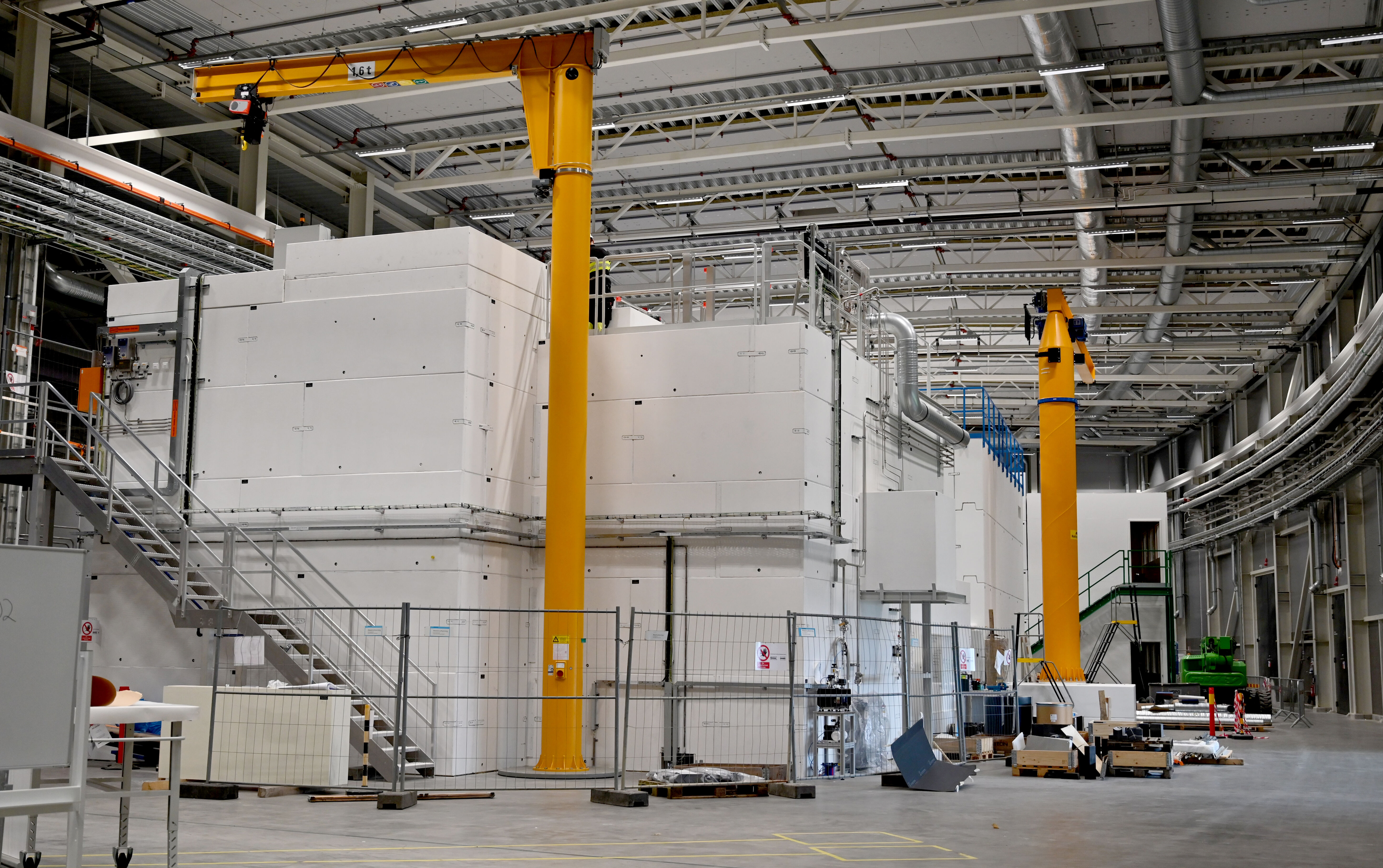
Three of the first 15 scientific instruments at ESS are ready to take neutrons. In this series, we tell the story of those instruments and what scientists are planning to study with them. We start with BIFROST, an instrument designed to study samples under extreme environments, built by the Technical University of Denmark (DTU), Copenhagen University, Laboratoire Leon Brillouin - France (LLB), Institute for Energy Technology - Norway (IFE), Paul Scherrer Institute - Switzerland (PSI) and ESS.
Fifteen scientific instruments are currently being built at ESS, each one designed to detect and measure how neutrons interact with materials in different ways. All the instruments will help researchers understand the structure and function of materials, from the microscopic down to the atomic scale. Using neutrons will enable researchers to investigate the world around us and also to develop new materials for health, food, energy, transport, IT and more.
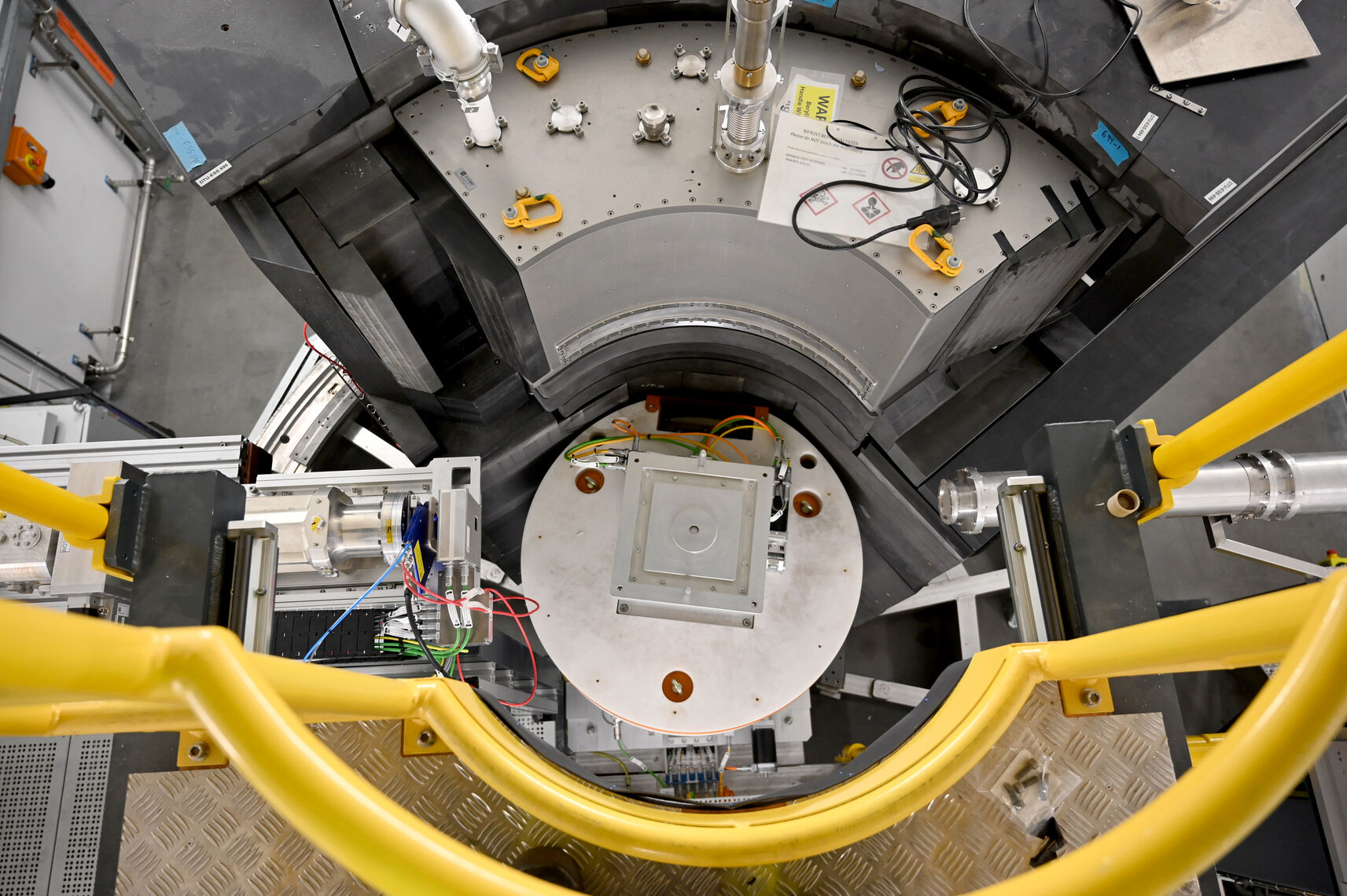
One of the instruments is BIFROST, which is unique in that it can allow very small samples to be measured – 2 by 2 by 2 mm or even smaller – and under extreme environments, such as very low temperatures, very high pressure or under high magnetic fields.
BIFROST measures the changes in both the energy and the direction of neutrons when they interact with a sample. This provides information on the energy scales of atomic and magnetic motions in materials and their corresponding direction.
Research that BIFROST will enable
In early science workshops, the scientific community has already contributed ideas for BIFROST’s first science experiments. An area where BIFROST offers unique opportunities is in the study of high-temperature superconductors. Superconducting materials allow an electric current to pass through them with no resistance; they are used widely, for example in MRI magnets and power grids. Superconductors are expected to revolutionise the power grid by enabling lossless power transmission, compact high-capacity cables and ultra-efficient energy storage systems. Initially, superconductivity required extremely low temperatures - around -269°C. However, in the 1980s, scientists discovered that magnetic interactions can also induce superconductivity, and at higher temperatures (around -150°C). The so-called high-temperature superconductors allow new applications of superconductivity and bring a power grid revolution ever closer to reality.
How exactly magnetic fluctuations cause superconductivity in these materials is not known. Neutrons have been used to study them, but because the interactions with the magnetic moments are very weak, enormous amounts of neutrons are needed, which only a few facilities can provide. However, scientists have shown that the magnetic fluctuations are extremely sensitive to pressure, so applying pressure becomes a way of studying their relationship with superconductivity.

Rasmus Toft-Petersen, Lead Instrument Scientist for BIFROST, explains, “But when you have high pressure, you have to work with small samples of down to 2mm in width. There's no way around it. And BIFROST is the only option: it can take small samples, apply high pressure and hit the samples with intense neutron fluxes”.
The steps after receiving neutrons
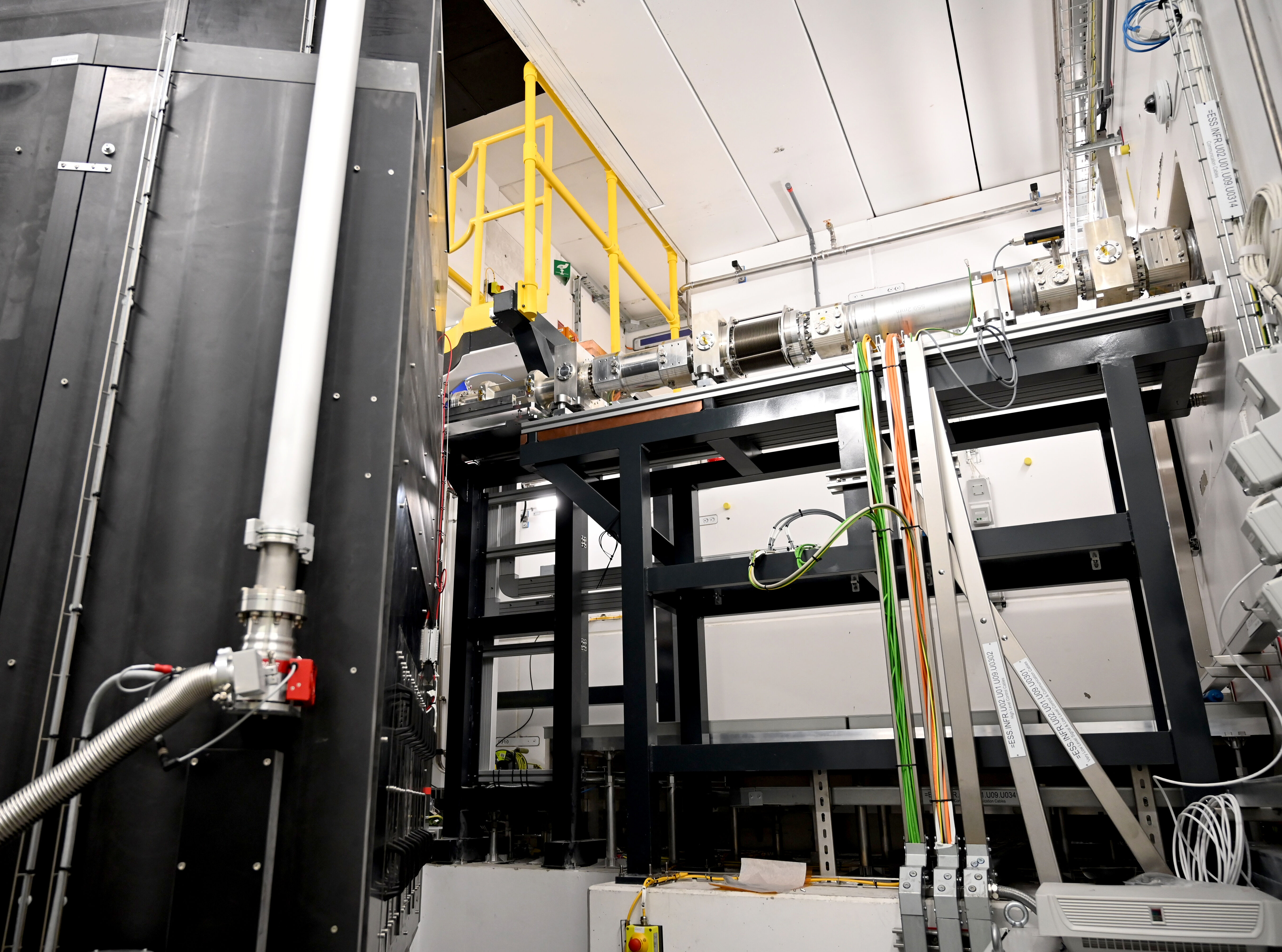
After 14 years in the making (from design to construction), BIFROST passed a crucial test in December 2025, the instrument Safety Readiness Review (iSRR), and is now ready to take neutrons. Passing the iSRR means that BIFROST is safe to operate: that all the complex systems that have been installed are ready, work and, importantly, do so safely in an integrated manner.
“Being ready for neutrons and being ready for science are two different things”, reminds Rasmus. “In the six to nine months after BIFROST receives its first neutrons, we will be commissioning the instrument to be ready for researchers. For example, we need to understand the background noise in the measurements; the data pipeline must be completely ready and tested so that the scientists (users) go home with interpretable datasets that they can draw conclusions from. We’ll then take a simple system that has been measured many times before and test if our instrument can reproduce what other scientists have measured previously, before we ramp up for more complex experiments”.
What’s in a name

In BIFROST, the neutrons that hit the sample cover a range of energies; the detectors around the sample measure scattered neutrons of only a single energy. This allows very efficient measurements of a single plane with high resolution, and crucially, very high neutron flux.
The rainbow of neutron energies that hits the sample inspired the name of the instrument. Bifrost is the rainbow bridge in Norse mythology that connects Midgard (the world of humans) with Asgard (the world of the gods).
It is also the name of a Danish rock band – a copy of one of their albums featuring the rainbow bridge can be found in the BIFROST data hutch.