Test Beamline
Time-Of-Flight High-Flux Observatory For Research Use
The Test Beamline is a direct line-of-sight beamline from the moderator to the end station. The Test Beamline does not use neutron guides meaning the full neutron spectrum can be realised. It will be the first instrument at ESS to intentionally receive neutrons and verify the first neutron production.
The Test Beamline preserves the original neutron beam profile with minimal distortion. This allows scientists to directly characterise the neutron beam emerging from the moderator and compare measured performance against simulation predictions. It is also designed as a flexible platform for neutron imaging/diffraction experiments, detector development, and component testing.
The Test Beamline will not be available for general proposal submission.
Instrument Class
Beam Port
Lead Scientist
Lead Engineer
The Test Beamline is designed primarily to characterise and verify the performance of the ESS moderator during the first stages of neutron production. It is unique in its ability to observe not only both thermal and cold neutrons but also epithermal/fast neutrons, providing a complete picture of moderator-target performance.
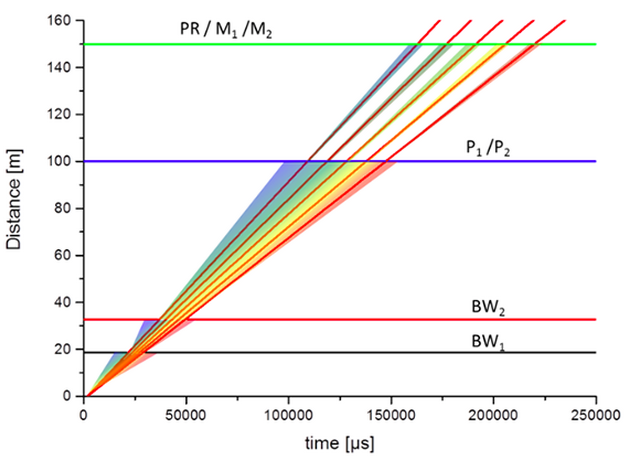
By maintaining a short and unobstructed beam path, the instrument benefits high neutron flux as well as preserves the intrinsic (time-of-flight) properties of the neutron beam emerging from the moderator. The instrument receives undistorted neutron beam enabling direct comparison between measured neutron profiles and simulated moderator behaviour.
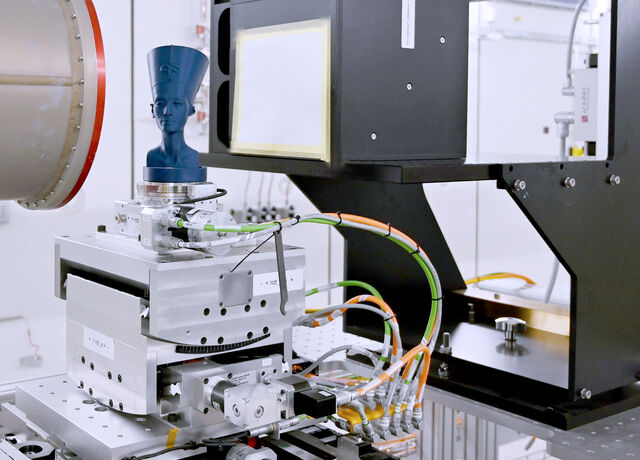
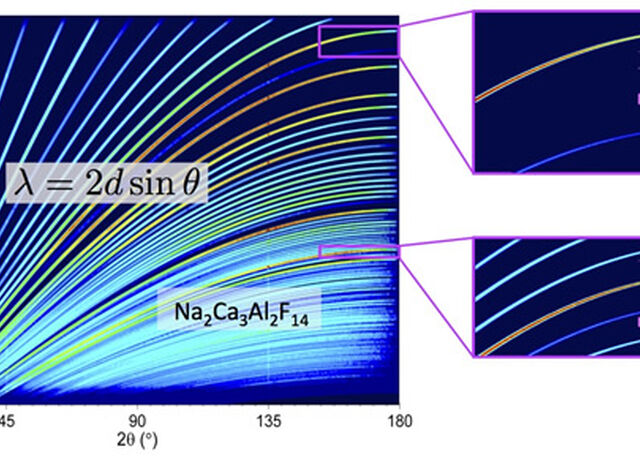
It mainly supports neutron imaging and diffraction experiments. It also serves as a flexible platform for detector testing, instrumentation development, and experimental prototyping before deployment on dedicated ESS instruments.
Potential research areas include:
- Spallation Physics
- Energy science
- Chemistry
- Environmental science
- Electronics
- Geoscience
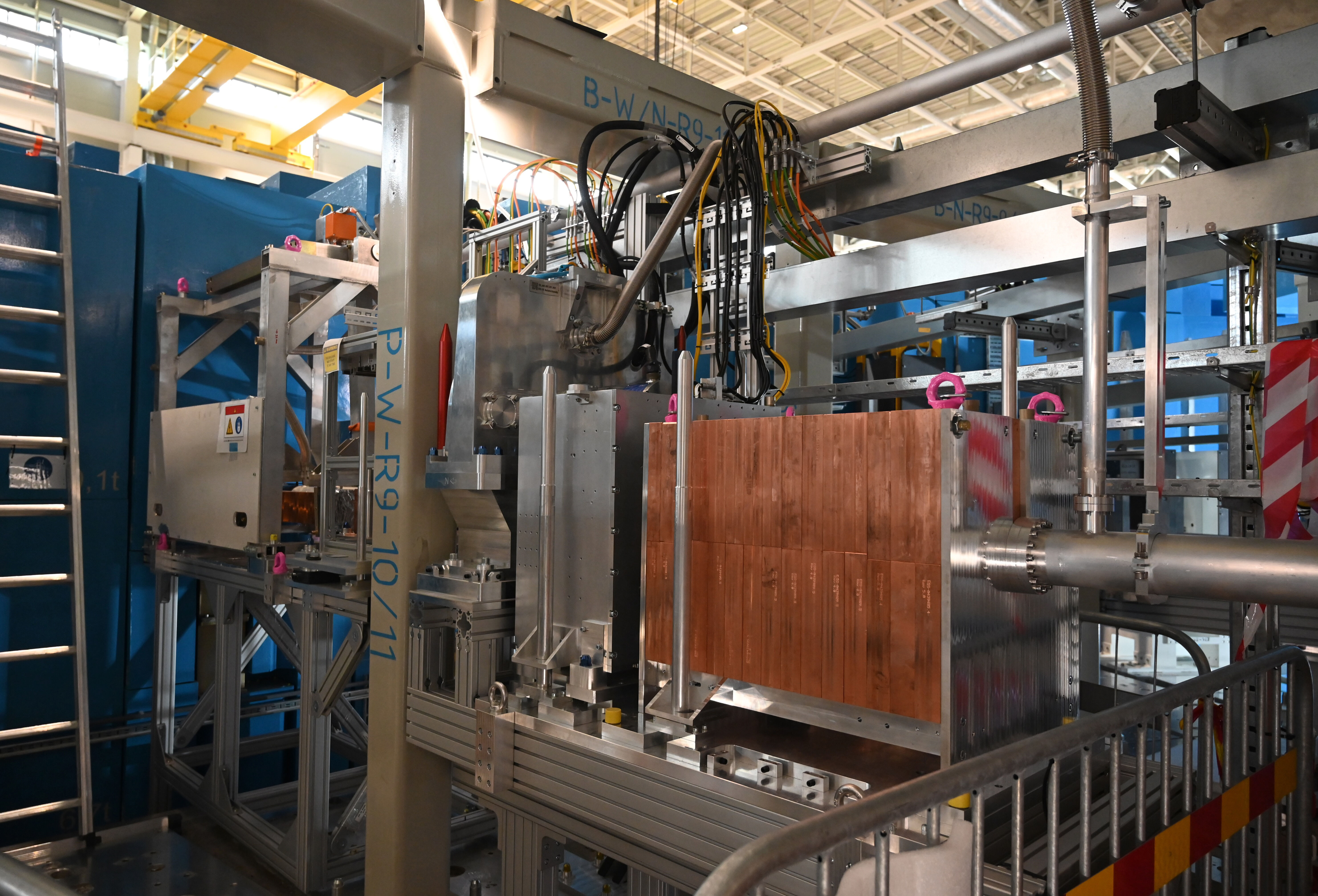
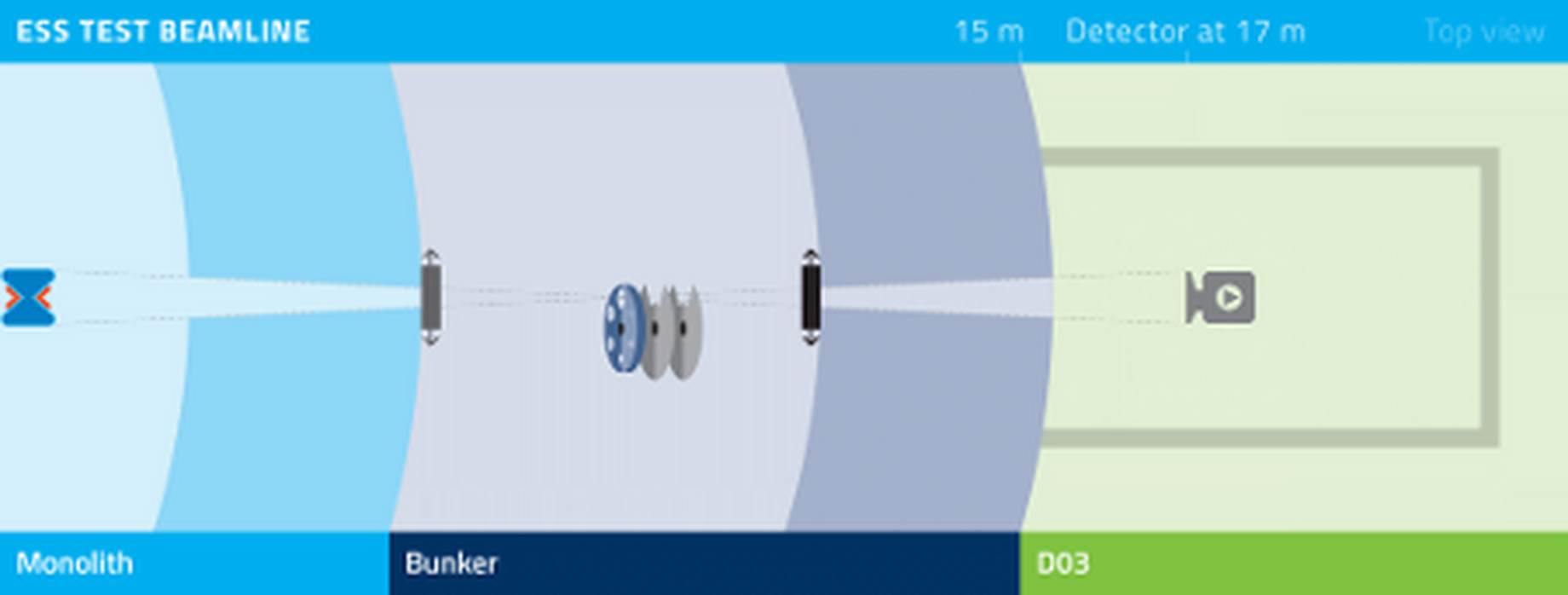
The Test Beamline is designed as a direct beam instrument without neutron-optics complexity in order to preserve the natural neutron beam profile from the ESS moderator.
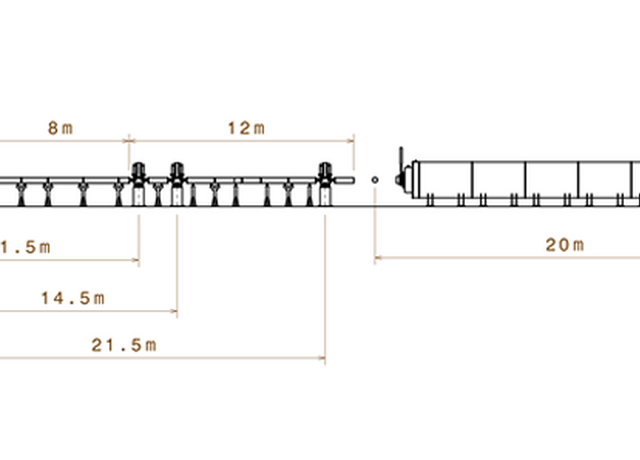
The instrument maintains a short, unobstructed flight path between the moderator and detector. This configuration simplifies moderator imaging and beam verification during commissioning and early-stage operations. The modular instrument layout allows detectors and sample environments to be positioned at different locations relative to the sample, enabling flexible diffraction measurements and instrument-development activities.
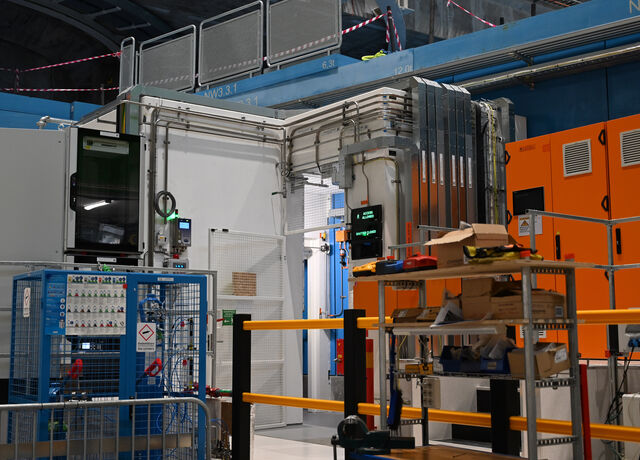
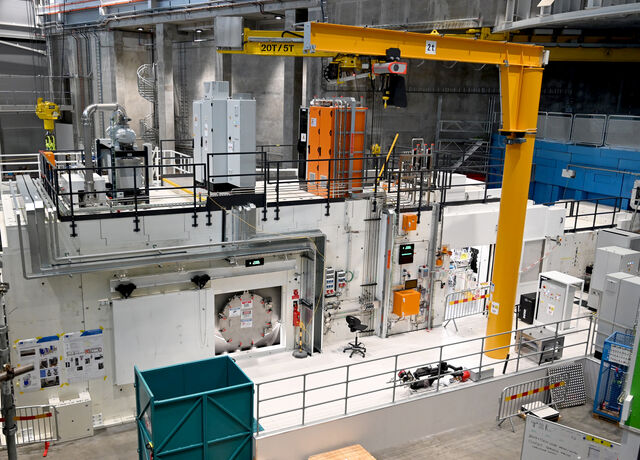
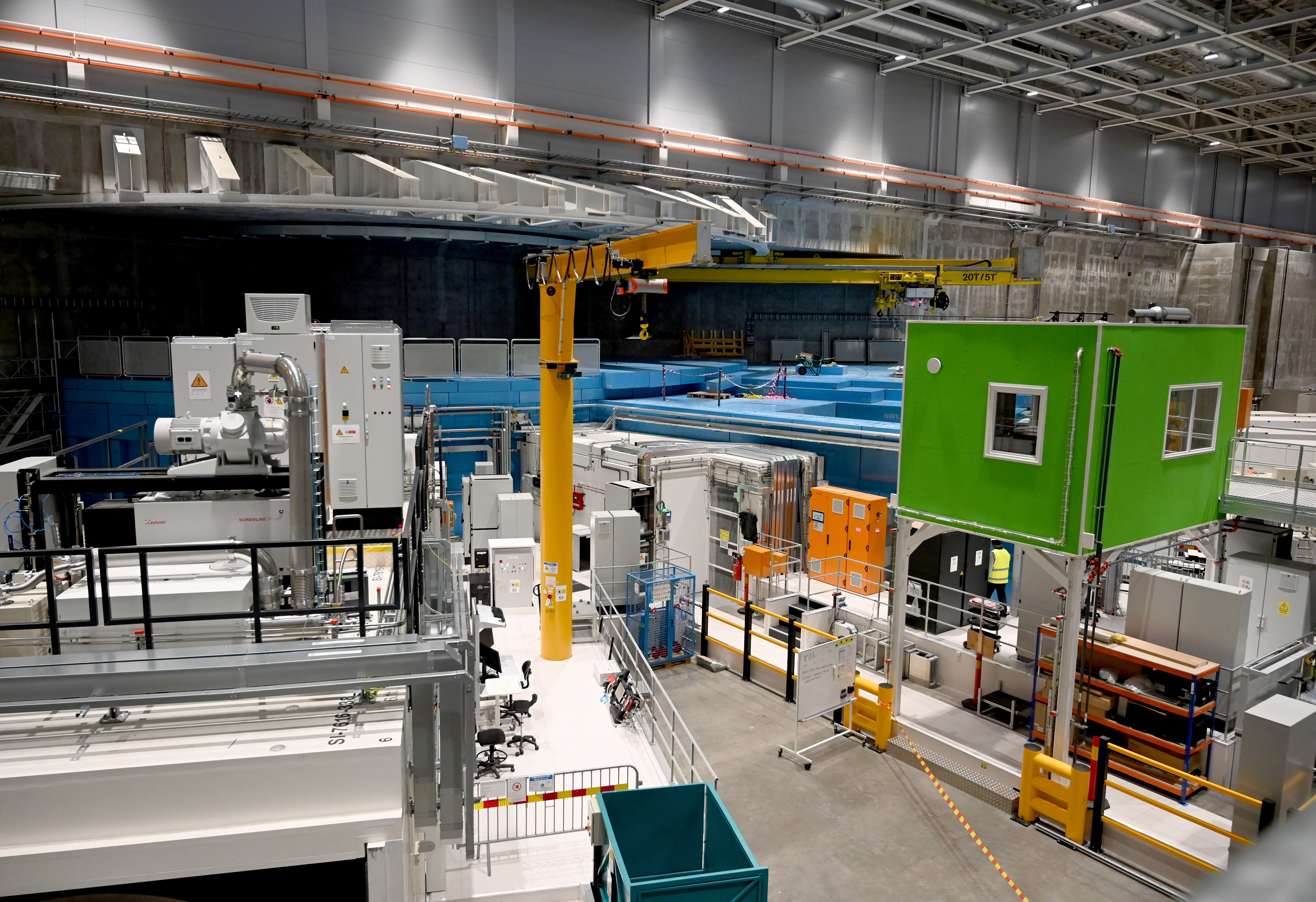
The Test Beamline is located in Experiment Hall 1.
Publications
Andersen, K. H. et al. The instrument suite of the European Spallation Source. Nuclear Instruments & Methods in Physics Research Section a-Accelerators Spectrometers Detectors and Associated Equipment 957, 39, doi:10.1016/j.nima.2020.163402 (2020).
Tremsin, A.S. et al. Calibration and optimization of Bragg edge analysis in energy-resolved neutron imaging experiments, Nuclear Instruments and Methods in Physics Research Section A: Accelerators, Spectrometers, Detectors and Associated Equipment, 1009, doi.org/10.1016/j.nima.2021.165493.
(2021).
Wolfertz, A., Gustschin, A., Schulz, M. et al. LumaCam: a novel class of position-sensitive event mode particle detectors using scintillator screens. Sci Rep 14, 30495, doi.org/10.1038/s41598-024-82095-2 (2024).
Woracek, R., Hofmann, T., Bulat, M., Sales, Habicht, K., Andersen, K., Strobl, M. The test beamline of the European Spallation Source – Instrumentation development and wavelength frame multiplication, Nuclear Instruments and Methods in Physics Research Section A: Accelerators, Spectrometers, Detectors and Associated Equipment, 839, doi.org/10.1016/j.nima.2016.09.034 (2016).
Lead Scientist
Thawatchart Chulapakorn
Lead Engineer
Christofer Svensson
Instrument Operations Engineer
Jason Morin
Installation Package Leader
Samuele Andreucci
Relevant links
Instrument Feature Stories