Successful applications to Horizon Europe funding solidify ESS as a crucial node in the European research ecosystem.
To be successful, a large-scale research infrastructure (RI), requires not only the best instruments, but also sophisticated management, advanced technical skills and sustainable innovation. Three new projects, to the value of €11.6 million, underscore the expertise that ESS brings to the table, both as a coordinator and a partner. The projects will start in 2026.
Professionalising the RI management: PRIME-ARI
ESS will coordinate the PRIME-ARI (PRofessionalisation and Innovation in Management and Engineering for Analytical Research Infrastructures) project, a seven-partner initiative designed to strengthen the technical and administrative backbone of research facilities.
Managing an RI requires a unique blend of skills, from innovation procurement to complex financial governance and strategic communication. PRIME-ARI aims to strengthen these roles, fostering a cross-infrastructure curriculum covering both administrative and engineering topics that will ensure Europe’s scientific facilities remain agile, sustainable and high-performing. For ESS, leading this project is an opportunity to export its own operational standards and systematise the expertise gained during its construction phase into a broader framework for the European research landscape.
The partners in PRIME-ARI are X-officio Research AB, Institut Laue–Langevin, European Solar Telescope Fundación Canaria, Universita' Degli Studi di Milano-Bicocca, CERIC ERIC and European XFEL X-ray Free-Electron Laser Source.
Bridging science and industry: COORDINA-INNOV
The transition from experimental research to industrial application is often the most challenging leap in the innovation cycle. As a partner in the COORDINA-INNOV (Strengthening Coordination for Joint Technology Development in Research Infrastructures) project, ESS is helping to bridge the gap between Big Science and industry, with a specific focus on integrating small and medium-sized enterprises (SMEs). By building methodology for joint technological roadmaps and governance models, COORDINA-INNOV seeks to turn fragmented efforts into a cohesive innovation ecosystem.
Led by Deutsches Elektronen-Synchrotron DESY, COORDINA-INNOV brings together 11 partners from Germany, Spain, France, Switzerland, Italy, Netherlands and UK.
Pushing accelerator frontiers: EPITA
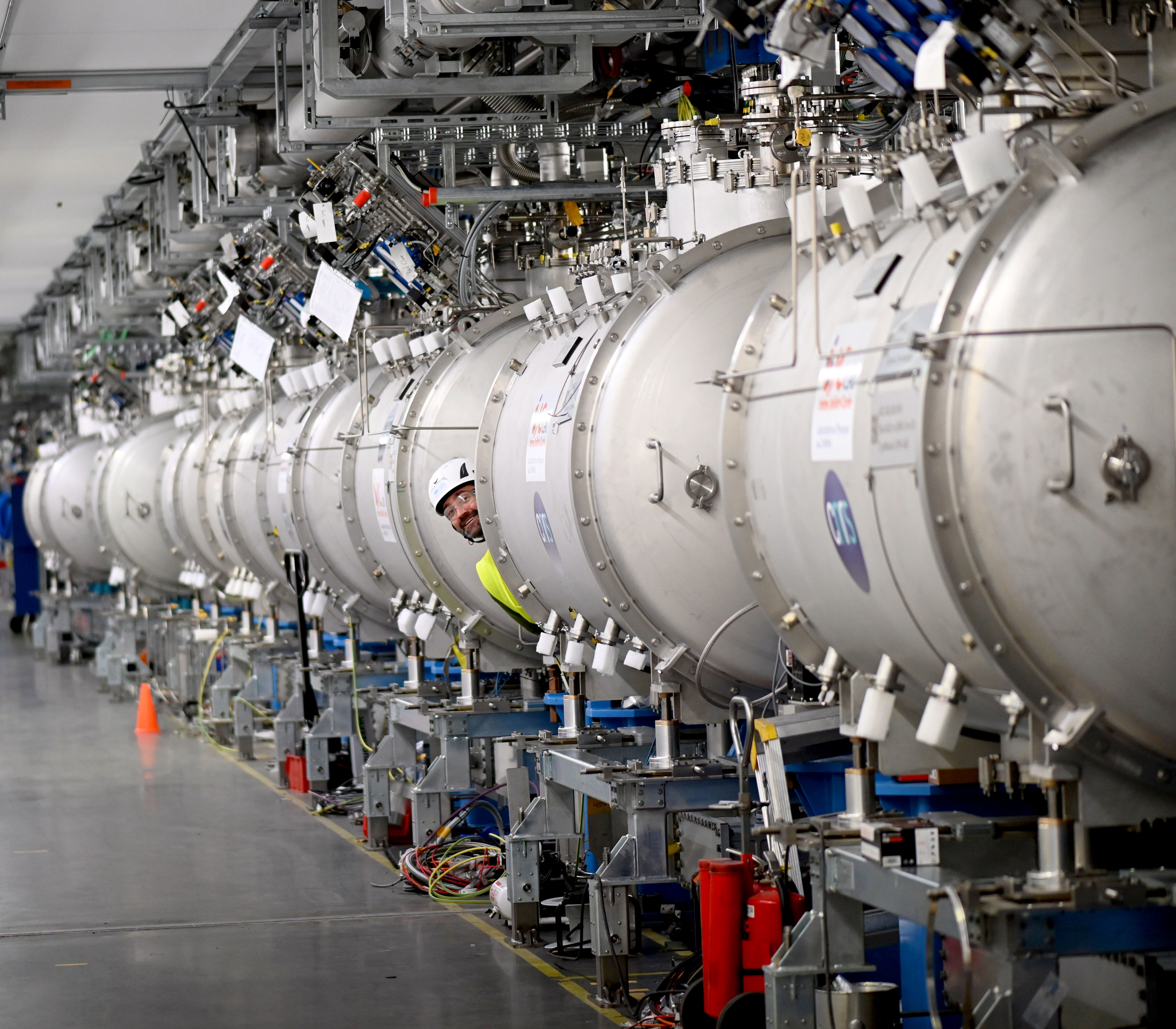
ESS’ accelerator is designed to be the world’s most powerful linear accelerator. The EPITA (Enabling Partnerships for Innovation & Accelerator Technology Advancement) project allows ESS to leverage this core competency to advance the wider European accelerator landscape.
By mobilising a multinational consortium led by CERN, EPITA targets the development of 22 high-performance prototypes, ranging from advanced magnetics to additive manufacturing techniques. This work is not merely theoretical; it is also about establishing the building blocks for the next generation of accelerators. For ESS, participation in EPITA is a dual investment: it reinforces the facility’s own technical resilience while contributing to a collaborative network that keeps Europe at the cutting edge of accelerator physics.
The 46 partners in EPITA come from Switzerland, Sweden, Spain, France, Italy, Germany, Slovakia and Slovenia.
A Strategic Partnership
These projects confirm that the ESS continues to fulfill a pivotal role in the European Research Area (ERA). By investing in the people, the processes and the prototypes that support science, ESS is building a facility while simultaneously helping to design the environment in which future science will thrive. As these projects mature, they will provide a foundation of expertise, partnerships and technical innovation that will serve scientific users at ESS and other facilities across Europe.
To learn more about grants operations at ESS, visit ESS Grants. To get in touch with the Grants Team at ESS, contact them at grants@ess.eu.